Photographs don’t just capture moments—they preserve diplomacy in motion. When a British monarch steps onto American soil, the images that follow carry layers of meaning: tradition meeting democracy, history brushing against modernity, and personal gestures shaping international perception. As King Charles III embarks on a state visit to the United States, the spotlight turns not only to the present but also to the visual legacy of royal presence across U.S. history.
These visits are never merely ceremonial. Behind every handshake, parade, and speech lies a carefully calibrated effort to reinforce one of the world’s most enduring alliances—often through the silent power of imagery. From black-and-white snapshots of wartime solidarity to vibrant color footage of state banquets, royal photos have served as both public relations victories and historical touchstones.
This article traces that visual journey, exploring how photographs of British royals in the U.S. have shaped perception, cemented alliances, and humanized monarchy—all leading up to Charles III’s first state visit as king.
The First Royal Footprint: King George VI in 1939
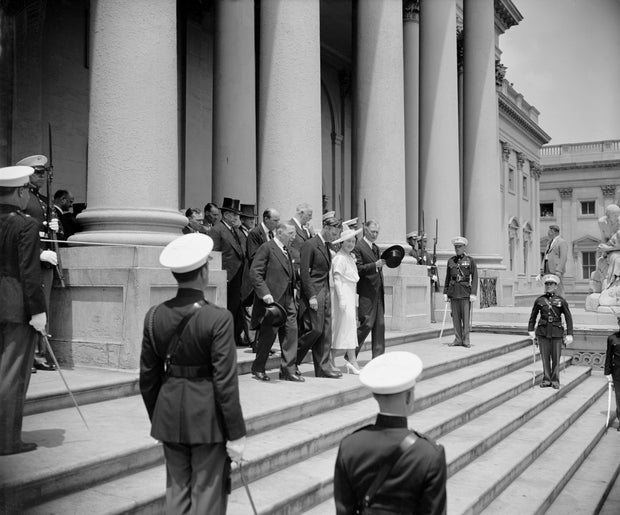
No photographic record of a British monarch on U.S. soil predates 1939. That changed when King George VI and Queen Elizabeth—the future Queen Mother—touched down in a United States bracing for global conflict.
The visit was a calculated diplomatic move. With war looming in Europe, President Franklin D. Roosevelt sought to strengthen ties with Britain—without overtly violating American neutrality. Inviting the royal couple was a subtle signal of alignment.
The resulting images spoke volumes. A famous photograph shows the king and president laughing over a picnic at Roosevelt’s Hyde Park estate, the monarchs seated at a simple wooden table, wearing casual attire. It was a masterstroke in soft diplomacy: the British king, traditionally distant and regal, shown as approachable, relatable.
Another iconic shot captures the royal couple waving from the back of a convertible during a motorcade through Washington, D.C. The crowd’s energy is palpable—thousands line the streets, children perched on shoulders, hands reaching out. The photo became symbolic of Anglo-American unity on the brink of war.
These weren’t just pictures. They were tools—framing monarchy not as a relic, but as a partner in a shared democratic struggle.
Queen Elizabeth II: The Reign in Pictures
If any royal defined the visual narrative of British visits to America, it was Queen Elizabeth II. Over more than six decades, her appearances evolved from formal engagements to deeply personal moments, each captured in photographs that entered the public consciousness.
Her first U.S. visit as queen in 1957 set the tone. Arriving at Washington National Airport, she was met with a 21-gun salute and a sea of American flags. A widely circulated photo from that trip shows her addressing a joint session of Congress—the first British monarch ever to do so. Dressed in a pale blue coat and pillbox hat, she stands framed by the chamber’s grand columns, a symbol of institutional continuity.
Later visits added warmth. In 1976, during the U.S. bicentennial, she opened the door to a more informal royal image. Photographs from her trip to Boston show her smiling as she watches a fife-and-drum corps, standing beside Paul Revere’s home, and even sampling clam chowder. The images were carefully curated to acknowledge American independence while celebrating shared heritage.
One of the most enduring photos from that era shows her riding in an open carriage through Philadelphia, waving to crowds. The shot, taken from a low angle, emphasizes her visibility and accessibility—contrasting sharply with earlier, more rigid royal portraiture.
:max_bytes(150000):strip_icc():focal(728x275:730x277)/princess-catherine-prince-william-donald-trump-king-charles-iii-trump-state-visit-uk-windsor-091725-8672599a27214b6f8ffdbb07fd7596e4.jpg)
By the 21st century, the visuals had shifted again. In 2007, during her trip marking the 400th anniversary of Jamestown, she was photographed laughing with President George W. Bush on the White House lawn. The image was widely shared, humanizing both leaders. Another shows her riding in a horse-drawn carriage through Richmond, Virginia—history echoing forward, captured in a single frame.
Each visit layered new meaning onto the royal image, with photos serving as both documentation and narrative device.
Prince Charles: From Heir to Head of State
Long before he became king, Charles made multiple visits to the U.S., building a photographic history of his own—one marked by evolution, controversy, and gradual acceptance.
His first major solo trip came in 1970, when he toured NASA facilities and met President Nixon. A stern photo from that meeting—Charles in a dark suit, Nixon looming beside him—contrasted sharply with the warmth of earlier royal encounters. At the time, Charles was still a young man in the public eye, often photographed looking awkward or disengaged.
But over time, the images softened. In 1993, he visited New York to promote environmental causes, a cause central to his identity. A notable photo from that trip shows him speaking at a sustainability forum, hands gesturing passionately. It was one of the first times he was captured not as a royal figurehead, but as an advocate.
Later visits emphasized connection. In 2011, he attended the dedication of the Martin Luther King Jr. Memorial in Washington, D.C. A powerful image from that day shows him placing a wreath at the base of the stone statue, head bowed. The photo resonated—linking British monarchy to American civil rights history in a single gesture.
These moments, preserved in photographs, laid the groundwork for how he would be perceived as king.
The Power of the Royal Photo in the Digital Age
In today’s media environment, a single image can define a visit—or undo it. The stakes for royal photography have never been higher.
Consider the 2018 visit of Prince Harry and Meghan Markle. Their trip included a widely shared photo of the couple laughing as they watched a fireworks display over Central Park. The image, casual and joyful, was a stark departure from traditional royal portraiture. It was shared tens of thousands of times on social media, reinforcing their image as modern, relatable figures.
But missteps are equally visible. A poorly framed or tone-deaf photo can spark backlash. When Prince Andrew visited New York in 2010, a photograph of him shaking hands with a financier later tied to serious allegations drew scrutiny. The image, once routine, became toxic in hindsight.
For King Charles III, every photograph now carries dual weight: heritage and accountability. His team understands this. The optics of his state visit will be meticulously managed—from the clothes he wears to the people he meets, all designed to project stability, continuity, and relevance.
Key Moments from Charles III’s State Visit
As King Charles III undertakes his state visit, several photographic moments are likely to define the trip:
- Arrival at Joint Base Andrews: Expect a formal welcome with full military honors, captured in wide-angle shots emphasizing scale and protocol.
- Meeting with the President: A tightly choreographed photo-op in the Oval Office or on the White House lawn, likely highlighting bilateral cooperation.
- Joint Address or Event: A public appearance—perhaps at a cultural or environmental initiative—designed to showcase shared values.
- Interaction with Veterans or Community Leaders: Images meant to convey empathy and connection, possibly during a visit to a nonprofit or historical site.
- State Dinner: The most visually rich moment of any state visit—a cascade of gowns, medals, and table settings, broadcast globally.

Each of these moments will be planned down to the second, with photographers positioned to capture not just what happened, but what it means.
How Royal Photos Shape Public Opinion
It’s easy to dismiss royal photographs as staged or superficial. But their influence is real—and measurable.
Studies in political communication show that visual cues often outweigh verbal messages in shaping public perception. A warm smile, a handshake with a child, or a moment of solemn reflection can alter how a leader is viewed across an entire nation.
Royal visits to the U.S. have consistently leveraged this. When Queen Elizabeth laid a wreath at the Tomb of the Unknown Soldier in 1957, or when Prince William visited Ground Zero in 2014, the images weren’t just respectful—they were strategic acts of symbolic solidarity.
For Charles III, this is especially crucial. As a king who has long operated in the shadow of his mother’s legacy, each photograph is an opportunity to define his own reign—not through speeches, but through presence.
The Enduring Symbolism of the Royal Visit
British royal visits to the U.S. are rare—only a handful have been classified as full state visits. Each one is reserved for moments of significance: anniversaries, crises, or transitions.
The photos from these trips do more than decorate history books. They become part of the collective memory—used in classrooms, documentaries, and political discourse. They remind Americans of a complex relationship: one born in revolution, tempered by war, and sustained by cultural affinity.
And now, with King Charles III stepping into this role, a new chapter begins. His visit isn’t just about diplomacy; it’s about visual storytelling. Can he project both tradition and transformation? Can the monarchy remain relevant in a world that increasingly questions inherited power?
The answer may not come in words. It will come in photographs.
Closing: Watch the Images, Not Just the Events
When King Charles III walks across the tarmac, waves to a crowd, or sits across from the President, don’t just observe the event—study the image. Who is in the frame? What are they wearing? How are they positioned? These details are intentional, designed to convey continuity, respect, and partnership.
The history of British royal visits to the U.S. has always been told through photographs. Now, another set of images is being created—one that will shape how this moment is remembered for decades.
Pay attention. The next iconic royal photo may already be in the making.
FAQ
Did any British monarch visit the U.S. before George VI? No. King George VI’s 1939 trip was the first visit by a reigning British monarch to the United States.
How many times did Queen Elizabeth II visit the U.S.? She made 26 official trips to the U.S. between 1951 and 2011, including state visits and private engagements.
Was King Charles III’s visit a state visit? Yes, his 2023 trip was designated a state visit, the highest level of diplomatic engagement.
Why are royal visits to the U.S. so rare? State visits require extensive planning and symbolic significance, and the U.S. typically reserves them for key allies during major anniversaries or diplomatic milestones.
What was the most memorable photo from a royal visit? Many point to Queen Elizabeth II’s 1976 bicentennial visit, especially the image of her sampling clam chowder in Boston—a rare informal moment.
Do royal photos influence U.S. public opinion? Yes. Visual moments humanize the monarchy and can strengthen public support for the UK alliance, especially during times of political tension.
How are royal visit photos selected for release? Royal and presidential press offices collaborate closely, choosing images that align with diplomatic messaging and public relations goals.
FAQ
What should you look for in British Royal Visits to the U.S. Through the Years? Focus on relevance, practical value, and how well the solution matches real user intent.
Is British Royal Visits to the U.S. Through the Years suitable for beginners? That depends on the workflow, but a clear step-by-step approach usually makes it easier to start.
How do you compare options around British Royal Visits to the U.S. Through the Years? Compare features, trust signals, limitations, pricing, and ease of implementation.
What mistakes should you avoid? Avoid generic choices, weak validation, and decisions based only on marketing claims.
What is the next best step? Shortlist the most relevant options, validate them quickly, and refine from real-world results.